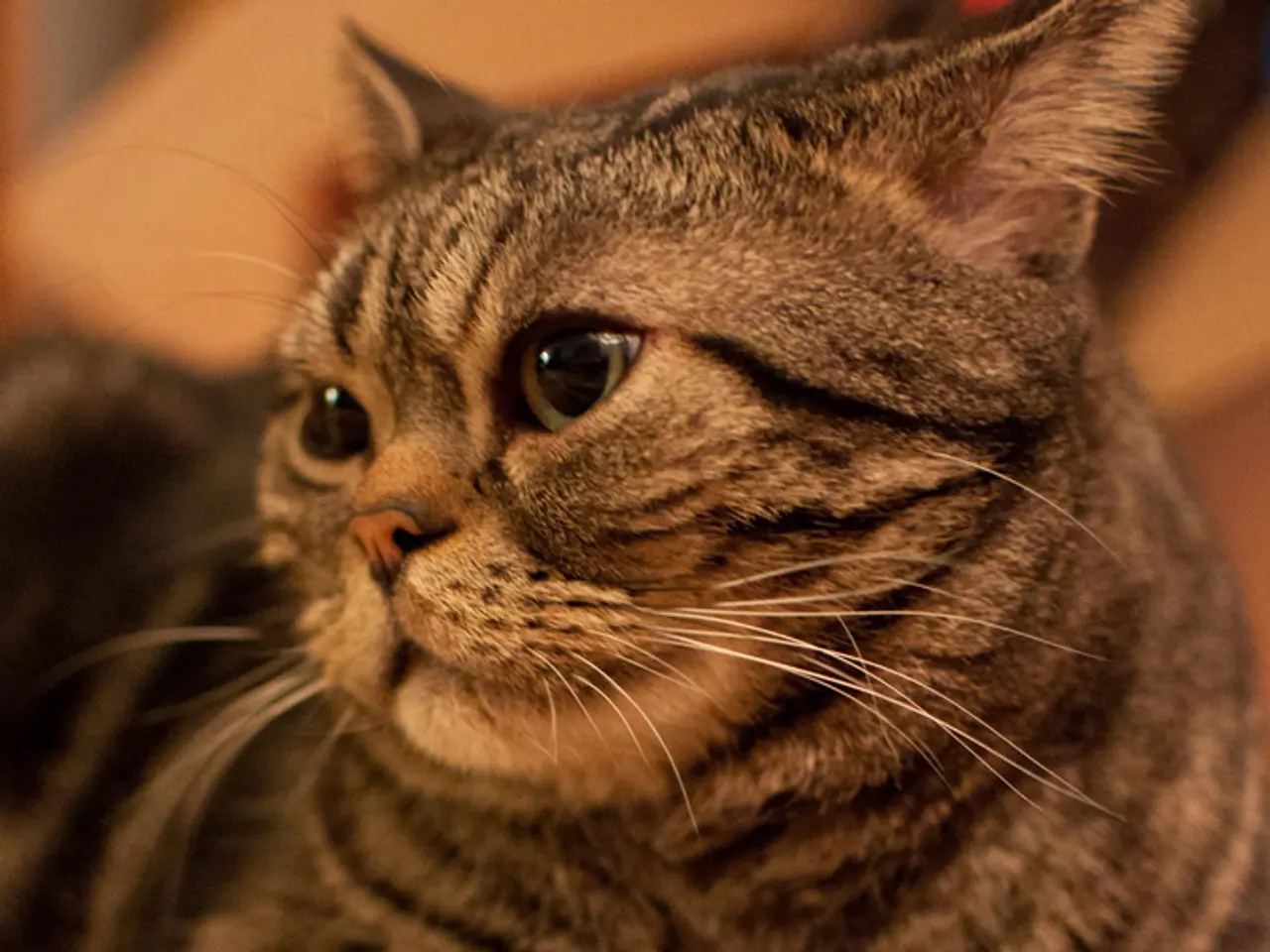
Cats undergo estrous cycles, similar to but not identical to the menstrual cycles of humans.
In the feline world, a recurring reproductive cycle known as the heat cycle, or estrus, is a significant event marked by behavioural signs such as increased vocalization, restlessness, and heightened affection. Female cats can experience multiple heat cycles a year and may mate with several males during a single cycle, potentially leading to a litter with multiple fathers [1][2][5].
Unlike human menstruation, cats do not menstruate and do not shed the uterine lining with blood during their heat cycles. Instead, cats are induced ovulators, meaning ovulation usually occurs after mating [1][2][5]. In contrast, human menstruation is a monthly cycle, during which the uterine lining is shed with bleeding if no fertilization occurs. The human menstrual cycle is regulated hormonally, involving a follicular phase, ovulation, and a luteal phase, and women do not have an estrus period with overt behavioural changes signalling fertility.
Key differences between a cat’s heat cycle and human menstruation include:
- Cats exhibit behavioural changes during estrus, whereas humans do not have an outward heat state.
- Cats do not menstruate; they do not shed the uterine lining with bleeding.
- Cats can go into heat multiple times per year, while human menstrual cycles are typically monthly.
- Ovulation in cats is induced by mating; in humans, ovulation occurs regularly and cyclically independent of intercourse [1][2][5].
It's essential to note that bleeding from a female cat's genital area is not normal and may indicate a medical issue. If a female cat is bleeding, it's crucial to contact a vet immediately [3]. Spaying a female cat can help prevent unwanted pregnancies and behaviours associated with the heat cycle [4].
Geographic and environmental factors significantly influence when cats go into heat. For instance, indoor cats with artificial light may go into heat more frequently than outdoor cats, and in warmer regions or with consistent light exposure, cats may experience heat cycles year-round [6].
Lastly, spaying a cat offers proven health benefits, reduces behavioural stress, and helps manage stray cat populations. By understanding the differences between a cat’s heat cycle and human menstruation, cat owners can make informed decisions about their pets' reproductive health and wellbeing.
[1] https://www.merckvetmanual.com/cat-behavior/reproductive-behavior/the-estrous-cycle-in-cats [2] https://www.vca-hospitals.com/know-your-pet/cat-care/cat-behavior/the-estrous-cycle-in-cats [3] https://www.petmd.com/cat/care/evr_ct_blood-in-urine-in-cats [4] https://www.aspca.org/pet-care/virtual-pet-behaviorist/cat-behavior/spaying-neuter-your-cat [5] https://www.ncbi.nlm.nih.gov/books/NBK532762/ [6] https://www.vetstreet.com/our-pet-experts/when-do-cats-go-into-heat
Technologies in home-and-garden can be used to regulate the light exposure for indoor cats, potentially impacting the frequency of their heat cycles. An informed lifestyle choice as a pet owner could involve providing a suitable lifestyle for indoor cats to align with their natural biological needs.
Incorporating pets into the home environment often requires considering their unique health, behavioral, and reproductive needs, a fact highlighted by the differences between a cat's heat cycle and human menstruation.