Comparing Russian Sage and Lavender: Which Offers More Vibrant Colors or Overpowering Scent?
In the world of horticulture, two plants have long captivated garden enthusiasts with their stunning beauty and low-maintenance appeal: Russian sage (Perovskia atriplicifolia) and lavender (Lavandula spp.). Despite their shared popularity, these plants hail from different origins and have distinct characteristics that make them unique additions to any garden.
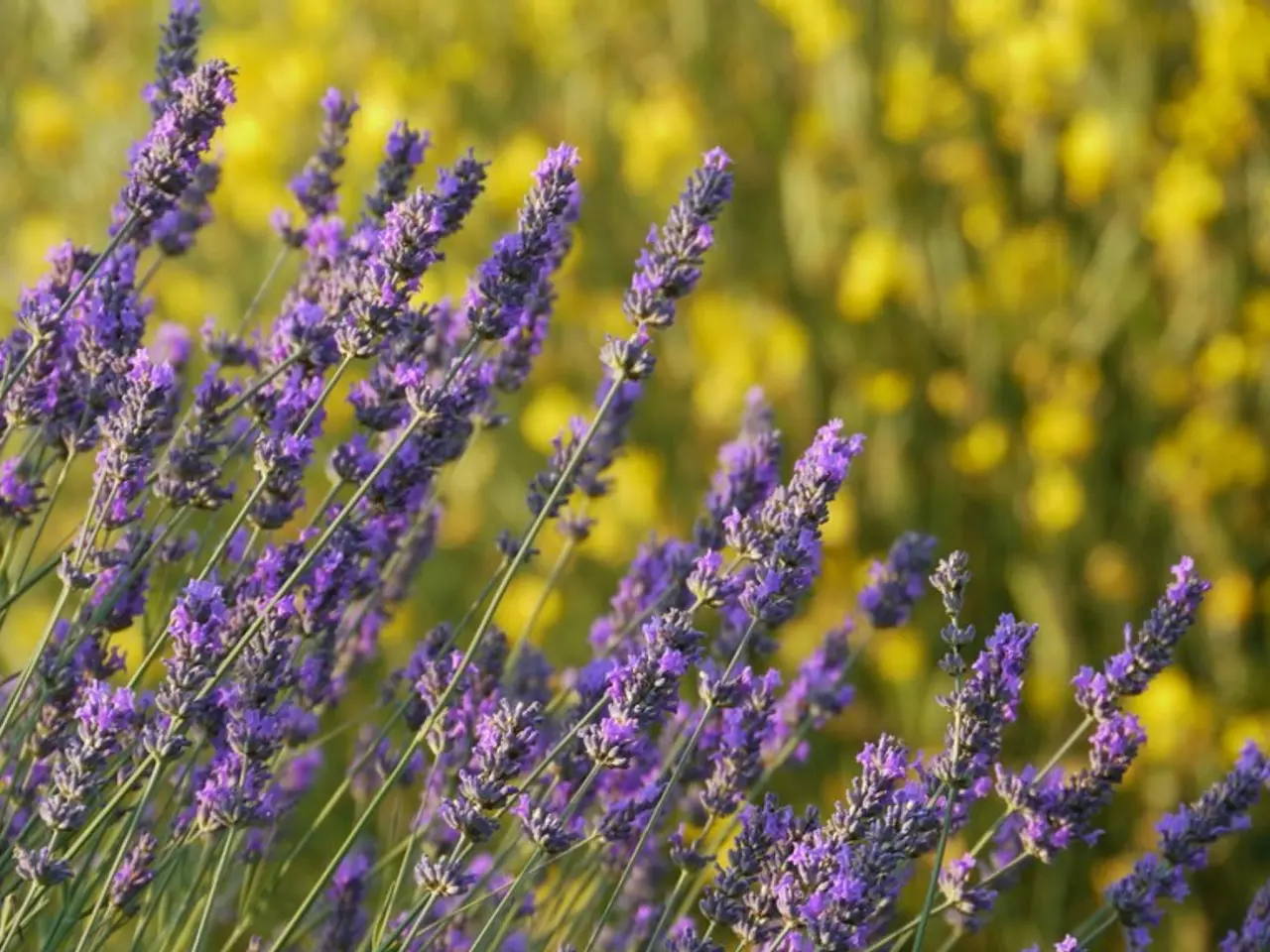
Originating in Central Asia, particularly Russia and neighbouring regions, Russian sage is a hardy perennial that stands tall, often reaching 1.5 meters (5 feet) with a larger spread. Its delicate foliage is grayish-green, and it boasts fine flowers on airy stems that give gardens a soft texture, lacy blue in colour. In contrast, lavender, native to the Mediterranean region, is a true herb that is valued for its fragrance and culinary uses.
When it comes to growth habits, Russian sage is taller and more spread out than lavender. Its deep root system helps it thrive in drought conditions, making it an ideal choice for pollinator gardens and tough sites. Lavender, on the other hand, is a more compact shrub, typically 1-2 feet tall and wide, with erect woody stems and narrow silvery-green leaves.
Russian sage is popular for its dramatic colour contrast in landscapes, extending colour into fall, while lavender is valued for its classic fragrance and insect-repellent properties. Lavender is widely used in essential oils, aromatherapy, and teas to relieve stress and promote relaxation. Its scent is also a natural insect repellent and attracts butterflies.
Both plants require full sun and well-drained soil, but they differ slightly in their watering needs and pruning practices. Russian sage is more tolerant of slightly moister conditions than lavender and benefits from deadheading to encourage reblooming. Lavender, however, needs very well-drained soil and drought-tolerant conditions but needs some watering during dry periods. It's essential to prune lavender after flowering to maintain its shape, while Russian sage should be cut back in early spring, especially after new growth appears.
Additional notes reveal that both plants attract pollinators such as bees, but lavender’s scent is also effective at repelling mosquitoes. Russian sage's taller size makes it suitable for mass planting or as a dramatic backdrop, whereas lavender often suits smaller spaces or container gardening.
It's essential to note that Russian sage is not a true sage but rather belongs to the mint family. The article was created in conjunction with AI technology and fact-checked and edited by a website editor to ensure accuracy and clarity.
Whether you're a seasoned gardener or a novice, understanding the key differences between Russian sage and lavender can help you make informed decisions when choosing plants for your garden. Both plants offer unique benefits and will undoubtedly add beauty and interest to any garden setting.
The time spent exploring the world of horticulture can be well-spent learning about Russian sage and lavender, two intriguing plants that diversity in their origin, appearance, and growth habits. While Russian sage, a hardy perennial originating from Central Asia, commonly reaches 1.5 meters tall and boasts soft, lacy blue flowers, lavender, native to the Mediterranean region, is a compact herb valued for its classic fragrance, culinary uses, and compact size of 1-2 feet tall and wide.