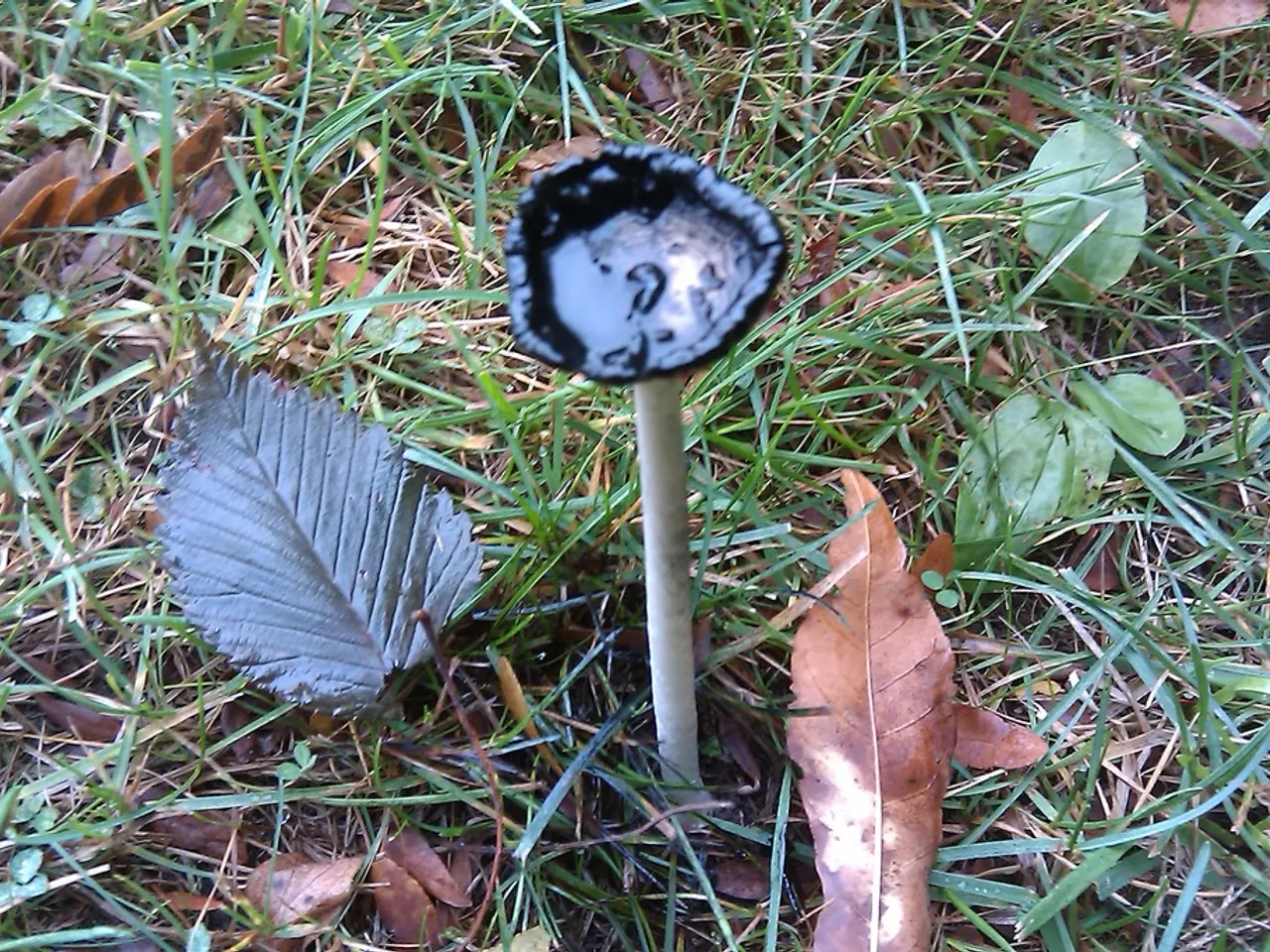
Comprehensive walkthrough on creating mushroom compost
In the world of gardening, spent mushroom compost is a valuable and economical soil amendment that offers numerous advantages. This by-product of the edible mushroom industry can significantly improve soil texture, fertility, and water management, promoting healthy plant growth in various applications.
One of the key benefits of spent mushroom compost is its ability to improve soil structure, particularly in heavy clay soils. It breaks up these soils, enhancing drainage and promoting better root development. Additionally, it increases moisture retention around plant roots, ensuring water availability even during dry spells.
The compost also adds humus and essential nutrients such as nitrogen, phosphorus, potassium, magnesium, and organic matter to the soil, enriching fertility. This makes it an ideal choice for vegetable gardening, particularly for Brassicas and other crops that need rich, well-structured soil.
Another advantage of spent mushroom compost is that it is steam sterilised, making it free from mushroom spores and weeds. This ensures that it can be applied safely without introducing unwanted organisms. Moreover, it has a near-neutral pH (6.5-7), suitable for most garden plants.
When it comes to using spent mushroom compost, there are several options. It can be used as a mulch, reducing weed growth, retaining moisture, and improving soil fertility. It is particularly effective when spread as a 5cm deep layer over the surface of the soil in the spring, before sowing seeds on vegetable beds.
In addition to mulching, spent mushroom compost can be used for soil conditioning to enhance poor or compacted soils. It is also beneficial for tree and shrub planting, supporting healthy root growth.
However, due to its open structure, spent mushroom compost can settle and compress. To achieve optimal results, it is advisable to increase the amount used by up to 30% compared to other compost types.
It is important to note that spent mushroom compost is not suitable for use on its own as a potting compost, or for growing seeds or cuttings due to raised concentrations of soluble salts. It is available from UK retailers in large bags, bulk bags, or as loose loads, and can be delivered according to the accessibility of your garden to the nearest road.
For the best value, it is recommended to buy spent mushroom compost that has already been used for growing mushrooms. This compost, rich in essential nutrients, is beneficial for improving waterlogged or clay soils as well as light, free-draining soils.
Spent mushroom compost is a versatile soil amendment that can be used in containers by mixing one part mushroom compost to three parts garden soil. It provides essential plant nutrients such as nitrogen, phosphorus, potassium, magnesium, calcium, and sulphur.
The compost is made from a blend of composted straw and well-rotted animal manure, usually horse and chicken manure. It is beneficial for brassicas (vegetables in the cabbage family) as it helps defend against club root, and for tomatoes as it has higher calcium levels that act against blossom end rot.
However, it is not suitable for use as a mulch for 'acid-loving' or 'ericaceous' plants like rhododendron, camellia, heather, and citrus due to its higher pH. Similarly, it is not recommended for use on soft fruit like raspberries, blueberries, and currants which need neutral to acid conditions.
In summary, spent mushroom compost is a valuable addition to any gardener's toolkit. Its benefits, including improved soil structure, increased moisture retention, added nutrients, and promotion of strong root development, make it a valuable ally in maintaining a healthy and productive garden.
In the realm of lifestyle and gardening, spent mushroom compost can be incorporated into a flowerbed or vegetable patch to enhance the soil's structure, fertility, and water retention, thereby supporting the healthy growth of various plants. Moreover, this compost, rich in essential nutrients, can be utilized as a potting mix for container plants, offering them crucial plant nutrients such as nitrogen, phosphorus, potassium, magnesium, calcium, and sulphur.