Historical Script Writing: Crafting Vibrant Drama in Period Dramas
In the world of film, war movies like Dunkirk (2017) and Saving Private Ryan (1998) have captivated audiences with their immersive realism, high stakes, and emotional clarity. To create such successful historical scripts, a writer must focus on thorough research, authenticity, and a deep understanding of the period being portrayed.
The key to writing a successful historical script is authenticity with intention, balancing historical accuracy with creative freedom. This means immersing oneself in the era, not just through history books and archival documents, but also through art, music, and other cultural expressions of the time.
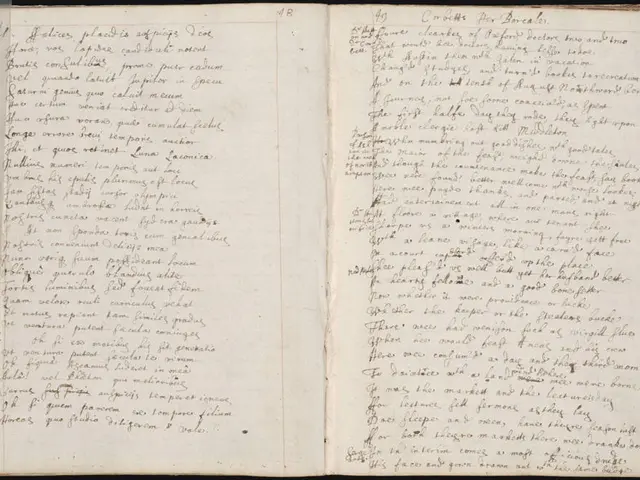
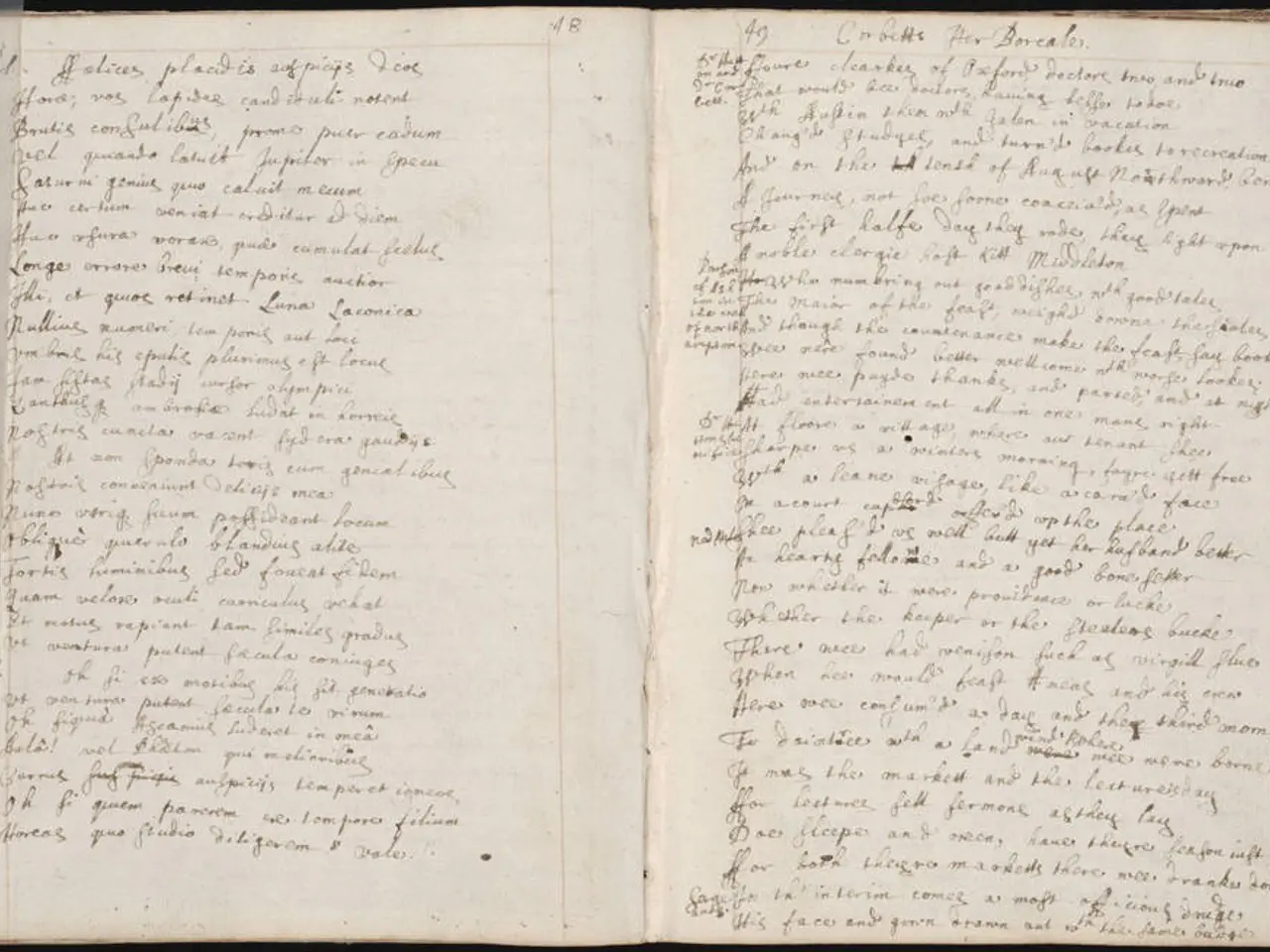
Start by gathering primary and secondary historical materials, such as manuscripts, letters, and scholarly works, to ground your script in fact. Learn about the period’s writing styles, communication methods, and daily life—this can include knowledge of handwriting or scripts like hieratic in ancient Egypt or Gothic calligraphy in medieval Europe, if relevant to your setting. Tools like generative neural networks can also assist in contextualizing ancient texts or linguistic styles to deepen authenticity.
Creating authentic characters with believable inner worlds that fit the historical setting is equally important. Characters should not just be dressed in period costumes; they should embody the social, political, and cultural context of the time. This means understanding the customs, politics, social norms, and language of the time, and using dialogue and vocabulary appropriate to the period while balancing accessibility for modern audiences.
Avoiding anachronisms in plot, character behavior, and setting is crucial. Showing historical events through personal stories to connect emotionally is also key. Consulting historians or experts when possible can provide valuable insights and ensure accuracy.
Helpful tools for this endeavour include historical archives and digital libraries, handwriting tutorials if your script features actual written materials or letters, and software for scriptwriting that helps track historical details.
Authenticity requires both attention to external details and a focus on the characters’ internal realities to create a period piece that feels true and resonates emotionally. Whether you're writing historical fiction, a period drama, a historical biography/biopic, or alternative history/genre fusion, remember that history isn't just a backdrop, but it's a character all its own. Write period pieces with a punch.
For instance, Pride & Prejudice (2005) is a historical romance that uses historical restrictions to heighten emotional tension and deepen character arcs. Writing a historical script involves extensive research, creativity, and a deep respect for the era being explored.
Choosing an era to write about should be based on personal interest and the answers to three questions: what fascinates you about this era, what kinds of conflicts naturally occurred in this time period, and are there untold or underrepresented stories worth exploring.
Historical fiction scripts use real historical settings and often actual events or figures, but the main narrative and characters are invented. Alternative history/genre fusion scripts take liberties with historical events or infuse the narrative with speculative elements. The movie Abraham Lincoln: Vampire Hunter (2012) is an example of genre fusion in historical storytelling.
Peaky Blinders (2013-2022) is a historical crime drama set in post-World War I Birmingham, blending historical grit with gripping crime drama. Christopher Nolan's Oppenheimer (2023) is a historical movie that uses nonlinear timelines to enhance theme and character development.
Historical biopics focus on a real person’s life, often emphasizing their historical significance. Remember, writing a historical script is a challenging but rewarding journey. Lean into tools like our website to stay organized and focused while writing a historical script. Our website offers tools for story development, character development, world-building, collaboration, and script formatting, making it especially helpful for organizing complex historical scripts.
Natasha Stares, a UK-based freelance screenwriter and script editor with a love for sci-fi, recently placed in the Screenwriters' Network Short Film Screenplay Competition and the Golden Short Film Festivals. She is a testament to the potential for success in historical scriptwriting.
In conclusion, writing a historical script is a journey of research, creativity, and a deep respect for the era being explored. Choose an era that fascinates you, immerse yourself in it, and let the story unfold. History isn't just a backdrop; it's a character all its own. Write period pieces with a punch.
- While immersing oneself in the historical research for a screenplay, it's essential to delve into the various art and cultural forms of the period, such as screenwriting considered as a lifestyle during the pre-production phase of a home-and-garden project.
- As a historical screenwriter, one must ensure that not only the setting but also the scriptwriting adheres to the specific writing styles and communication methods of the era, blending historical accuracy with creative freedom, thereby creating a film that Transportus viewers can truly appreciate.