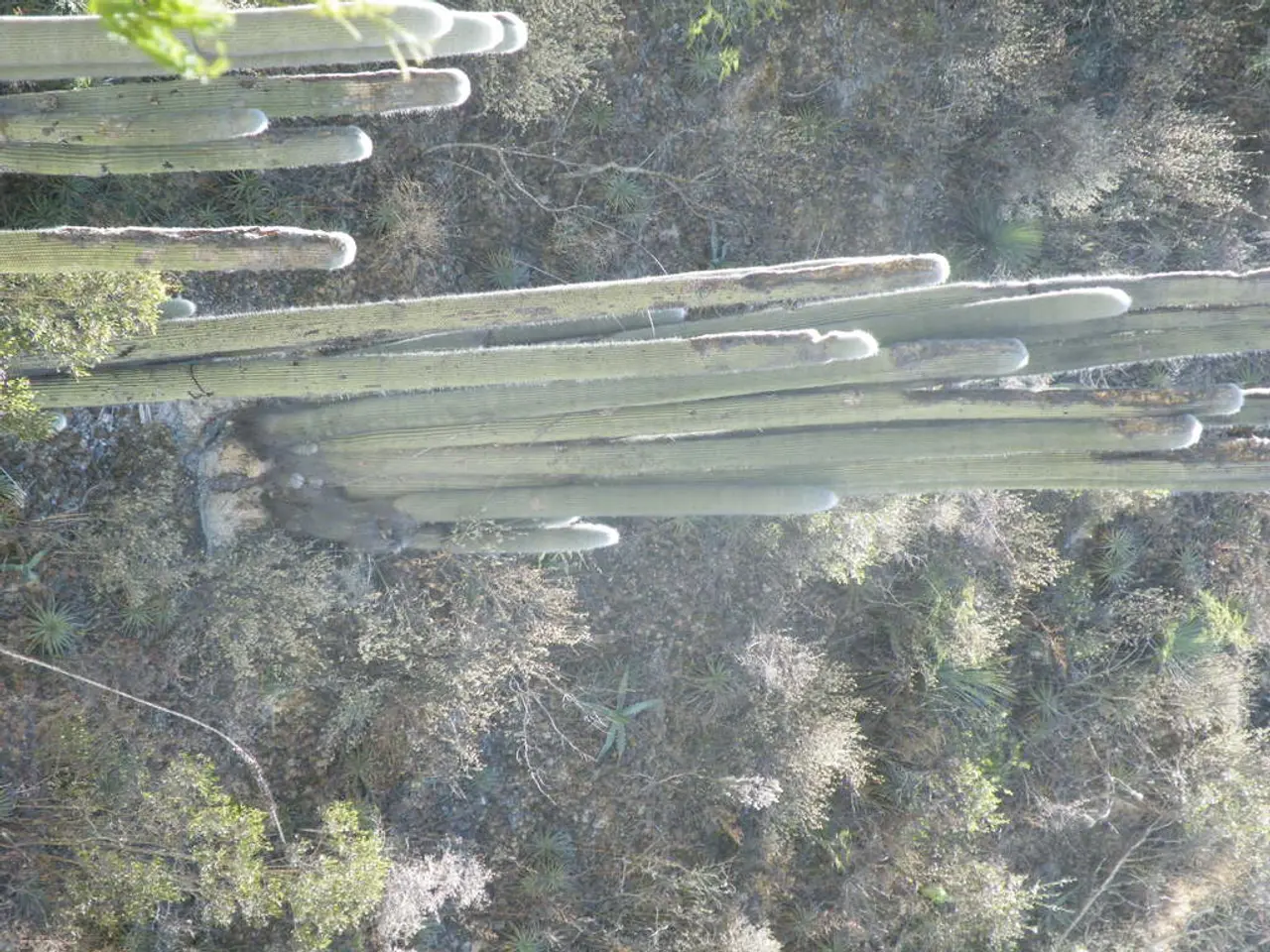
Resilience of Desert Flora in Challenging Ground: Insights into Desert Plants' Adaptability
In the arid landscapes of deserts, gardening may seem like a daunting task. However, with the right knowledge and techniques, it's possible to cultivate a lush oasis filled with hardy plants. Here are some tips for creating a thriving desert garden.
Desert plants, such as cacti and succulents, are known for their ability to withstand poor nutrient conditions. While they can survive in such environments, providing them with some essential nutrients will help them perform optimally. Cactus-specific fertilizers should be used sparingly and diluted to avoid overfeeding.
Watering these plants is just as crucial, but it should be done sparingly. Ensure your containers have adequate drainage holes and the soil mix is designed for these plants or amended with sand, gravel, perlite, or vermiculite for proper drainage.
Desert soils, with their sand-like texture and high mineral content, tend to crumble even when wet. Organic matter, such as peat moss and compost, can greatly improve soil structure, moisture retention, and nutrient availability. Testing your soil is essential to determine its pH level and nutrient composition. You can use at-home kits or send samples to a lab for more accurate results.
Common tips for improving soil drainage in desert gardening include incorporating organic matter, using raised beds, adding amendments to break up soil compaction, applying organic mulch, avoiding heavy tilling, and considering biochar mixed with compost for sandy soils. These practices help create a soil environment that balances moisture retention with efficient drainage, essential for healthy plant growth in arid conditions.
Desert plants, like mesquite, creosote bush, dropseeds, three awns, burrow grass, Joshua trees, yucca, desert orchids, and little bluestem, have adapted to the desert climate by developing deep root systems to access water and quick life cycles to make the most of heavy rainfall.
If your soil pH is too high, it can affect the types of mineral nutrients available and influence whether plants and soil microbes can effectively utilize these nutrients. The ideal pH level for healthy soil is between 5.5 and 7.5. If your soil pH is too high, you can use elemental sulfur to lower it.
Cacti and succulents thrive in sunny environments and well-drained soil, requiring at least six hours of direct sunlight each day and sandy, crumbly soil. They also benefit from ample space to grow and good airflow and lower humidity.
Caliche, a layer of calcium carbonate, forms in some desert soils and can be several inches thick. It acts as a barrier to plant roots and impedes water drainage. To enhance soil drainage in desert gardens, choose sandy, well-drained soil, create a slope, use raised beds, incorporate organic matter, utilize mulch, and plant in containers with drainage holes.
By following these tips, gardeners can create a thriving desert garden filled with hardy plants that can withstand the harsh conditions of the desert.
Incorporating cactus-specific fertilizers and improving soil structure with organic matter such as peat moss and compost can aid in nurturing desert plants for optimal performance. Desert gardening practices like using raised beds, adding amendments to improve soil drainage, and applying organic mulch are particularly beneficial for creating an ideal soil environment for hardy plants.