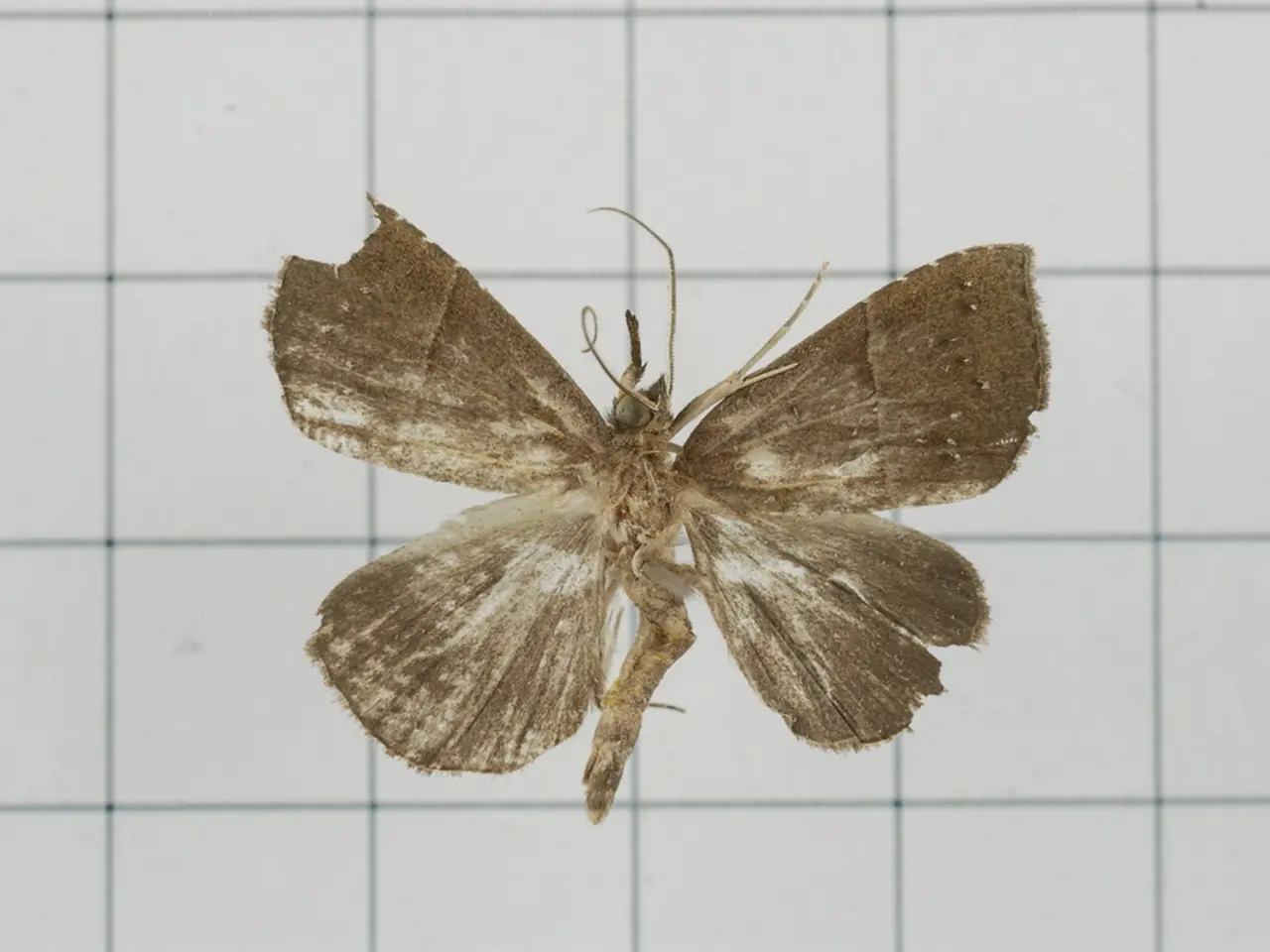
Summer Assault in Seoul: Combat against the Massive Swarm of " Lovebugs"
In the heart of South Korea, Seoul is currently grappling with an unusual urban nuisance - the lovebug. These harmless insects, native to subtropical regions of southeastern China, Taiwan, and Japan's Ryukyu islands, have made their presence known, causing disruptions and sparking a debate on urban pest control, environmental stewardship, and climate change adaptation.
First appearing in Korea in 2022, lovebugs have been causing quite a stir. Recognized for their pollination role, these insects have also become a significant bother due to their sticky swarms that disrupt daily life. To combat this, Seoul authorities have implemented a series of environmentally conscious and technologically innovative strategies.
One such approach is non-chemical spraying operations. The Seoul Metropolitan Government has initiated large-scale water spraying in parks and walking trails, particularly in districts with high complaint rates such as Geumcheon and Gwanak. This method, which exploits lovebugs' vulnerability to moisture, helps reduce populations without using harmful pesticides and preserves local biodiversity.
Emergency pest control operations have also been launched in outbreak epicenters like Incheon’s Gyeyang Mountain area. Personnel equipped with blowers, insect nets, and water sprayers are deployed to physically control the swarms and manage insect carcasses, which cause foul odors and health concerns.
Innovative traps developed by the National Institute of Biological Resources have shown promising results in attracting and capturing lovebugs. These traps are being installed in affected areas and are planned for expansion in future outbreaks as part of an eco-friendly and species-specific control effort.
A strategic framework for handling lovebug infestations has been established through inter-agency collaboration and response systems. This includes the Environment Ministry, Seoul Metropolitan Government, National Institute of Biological Resources, and local governments working together with a 24-hour response task force and expert advisory groups to integrate the latest research findings swiftly into field operations.
Outdoor lighting is being adjusted to deter lovebug swarms, and using water sprays can be employed to rinse off lovebugs from public furniture and walkways. Sticky traps are also being installed to deter lovebug swarms.
Experts warn that the lovebug phenomenon may recur and intensify as climate shifts continue. The rising temperatures and the urban heat island effect in Seoul have created hospitable breeding conditions for lovebugs. Rising complaints to Seoul authorities in the past year reflect this escalating issue.
The debate over pest control strategies for lovebugs is ongoing among city officials. Some advocate for the use of pesticides, while others caution against chemical use due to ecological disruption. The recommended tactics for lovebug control emphasize the importance of preserving biodiversity and minimizing environmental damage.
The lessons from Seoul's lovebug influx emphasize resilience and coexistence in the face of rapidly changing climates. Continued research and monitoring through government and scientific institutions are implied to understand these dynamics better and develop adaptive management strategies.
[1] Seoul Metropolitan Government. (2022). Lovebug Control Measures. Retrieved from [www.seoul.go.kr/lovabug](http://www.seoul.go.kr/lovabug)
[2] Environment Ministry. (2022). Lovebug Response Plan. Retrieved from [www.environment.go.kr/lovabug](http://www.environment.go.kr/lovabug)
[3] National Institute of Biological Resources. (2022). Lovebug Control Technologies. Retrieved from [www.nibr.go.kr/lovabug](http://www.nibr.go.kr/lovabug)
[4] Local Government Association. (2022). Lovebug Management in Urban Areas. Retrieved from [www.lgassociation.or.kr/lovabug](http://www.lgassociation.or.kr/lovabug)
- The lovebug issue in Seoul, initially seen in 2022, is a result of their migration from subtropical regions, such as China, Japan, and Korea's own Ryukyu islands, causing a stir and necessitating urban pest control strategies.
- To address this problem, the Seoul Metropolitan Government, in partnership with the Environment Ministry and other organizations, has launched initiatives like large-scale water spraying and strategic frameworks for integrated response systems, relying on environmental science and innovative technologies.
- One key strategy involves the use of non-chemical methods, like water spraying and eco-friendly traps developed by the National Institute of Biological Resources, to minimize ecological disruption and preserve local biodiversity.
- Despite these efforts, experts warn that the recurrence and intensification of lovebug infestations could be linked to climate change, urging continued research and collaboration to adapt to these environmental challenges, ultimately promoting coexistence and resilience in urban landscapes, much like home-and-garden practices for sustainable living.