The Enduring Durability of Legos Across the Ages
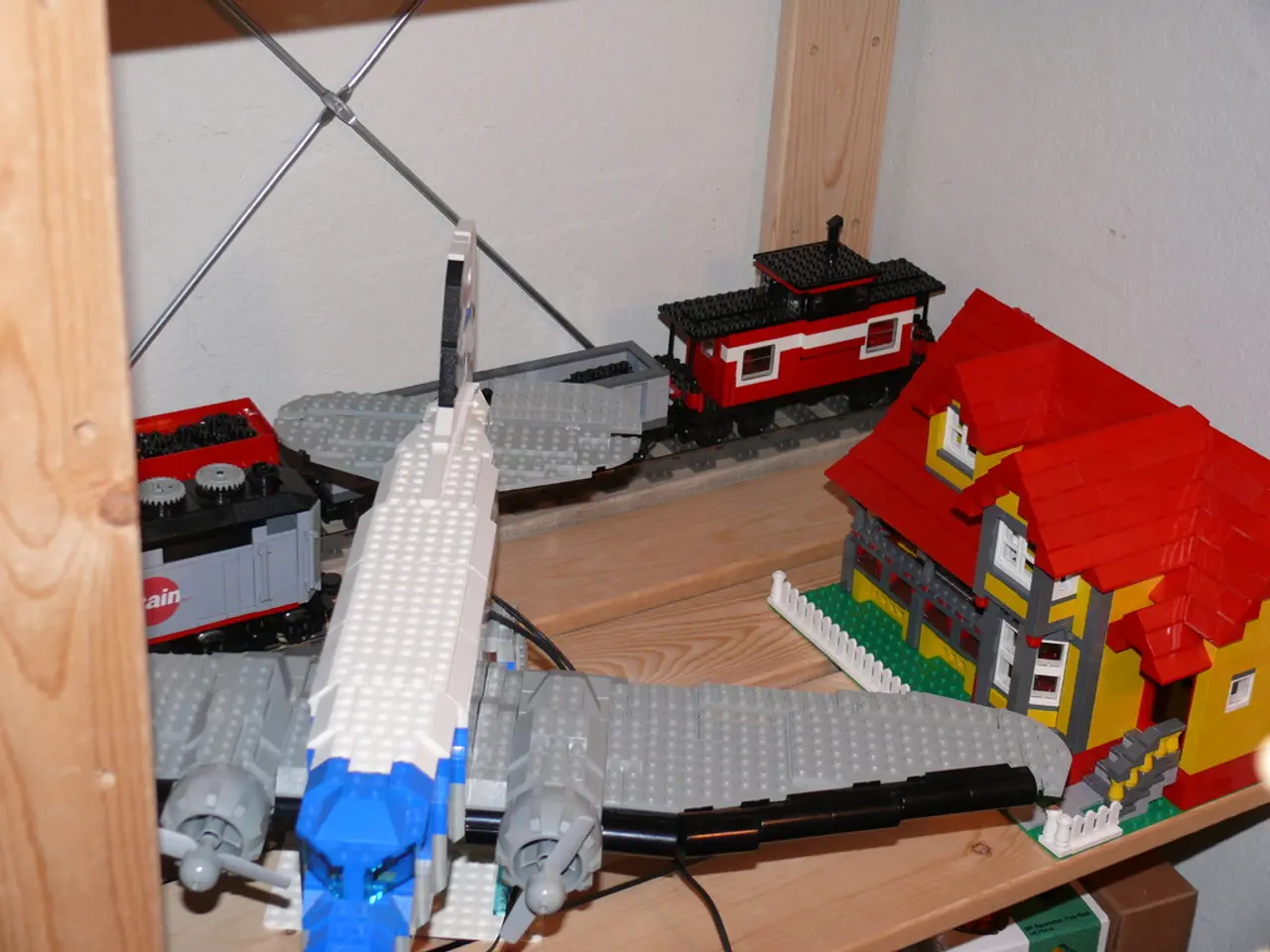
Lego, the iconic building toy, has a rich history and educational philosophy that has significantly influenced cognitive development, including in children on the autism spectrum.
History and Educational Philosophy
Originating in a non-descript hamlet named Billund in southern Denmark in 1936, Lego was founded by Ole Christiansen, a carpenter who transformed into a toymaker. Over the years, Lego Education has been built on the idea that children learn best when engaged in hands-on, meaningful activities, encouraging exploration and expression through physical manipulation of materials. This philosophy, known as constructionism, has been instrumental in Lego's evolution into a research-backed educational tool.
Lego has partnered with academic institutions globally for research and classroom testing to maximize learning outcomes aligned with educational standards.
Impact on Cognitive Development
Studies show that playing and building with Lego improves spatial reasoning, such as mental rotation skills, which are core to geometry and broader math performance. For instance, the SPACE program had 6-7-year-olds build Lego models, resulting in significant gains in mental rotation and geometry problem-solving.
Lego DUPLO sets are designed to develop both emotional intelligence (EQ) and logical thinking (IQ) in toddlers and young children, further supporting cognitive and emotional development as they grow. Benefits also include enhanced problem-solving abilities, creativity, fine motor skills, spatial awareness, and social interaction.
Impact on Children with Autism Spectrum Disorder (ASD)
While the search results do not detail studies specific to autism, the structured, visual, and tactile nature of Lego play is widely recognized in broader educational and therapeutic contexts as beneficial for many children on the autism spectrum.
Lego's hands-on, step-by-step building process aligns with learning preferences often observed in children with ASD, such as the use of visual supports and repeated practice that foster patience, focus, and flexible thinking. Social skills can be enhanced through cooperative Lego play, which is important for children on the autism spectrum as they learn communication and teamwork.
A Case Study: Lego-Based Therapy
Dr. Dan Legoff, a clinical neuropsychologist in Philadelphia, uses Lego-based therapy in his research to help children on the autism spectrum become more social and communicative. Amy Shelton, a cognitive psychologist at Johns Hopkins Center for Talented Youth, has found that playing with building blocks including Lego, helps children sharpen their spatial reasoning abilities.
When children play with Lego bricks, they analyze what parts make up the whole and how each block relates to one another, a process that can aid in problem-solving and manipulating 3-D information in their heads.
In summary, Lego's history as an educational tool emphasizing hands-on learning has laid a foundation for significant impacts on cognitive development, particularly spatial reasoning and problem-solving skills, with additional benefits for emotional and social growth. The characteristics that make Lego effective for neurotypical children strongly suggest its positive role for children with autism, especially in fostering structured learning, communication, and social interaction. This perspective is supported by ongoing educational research, though specific autism-focused empirical studies from the given results were not found.
'Integrating Lego into home-and-garden settings could provide an engaging learning environment, as its hands-on approach encourages exploration, expression, and cognitive development for children and adults alike, including those on the autism spectrum.'
'A lifestyle incorporating Lego play, whether in a classroom or at home, would not only focus on fundamental skills like spatial reasoning and problem-solving but also foster emotional intelligence, social interaction, and communication, particularly beneficial for individuals with autism.'