
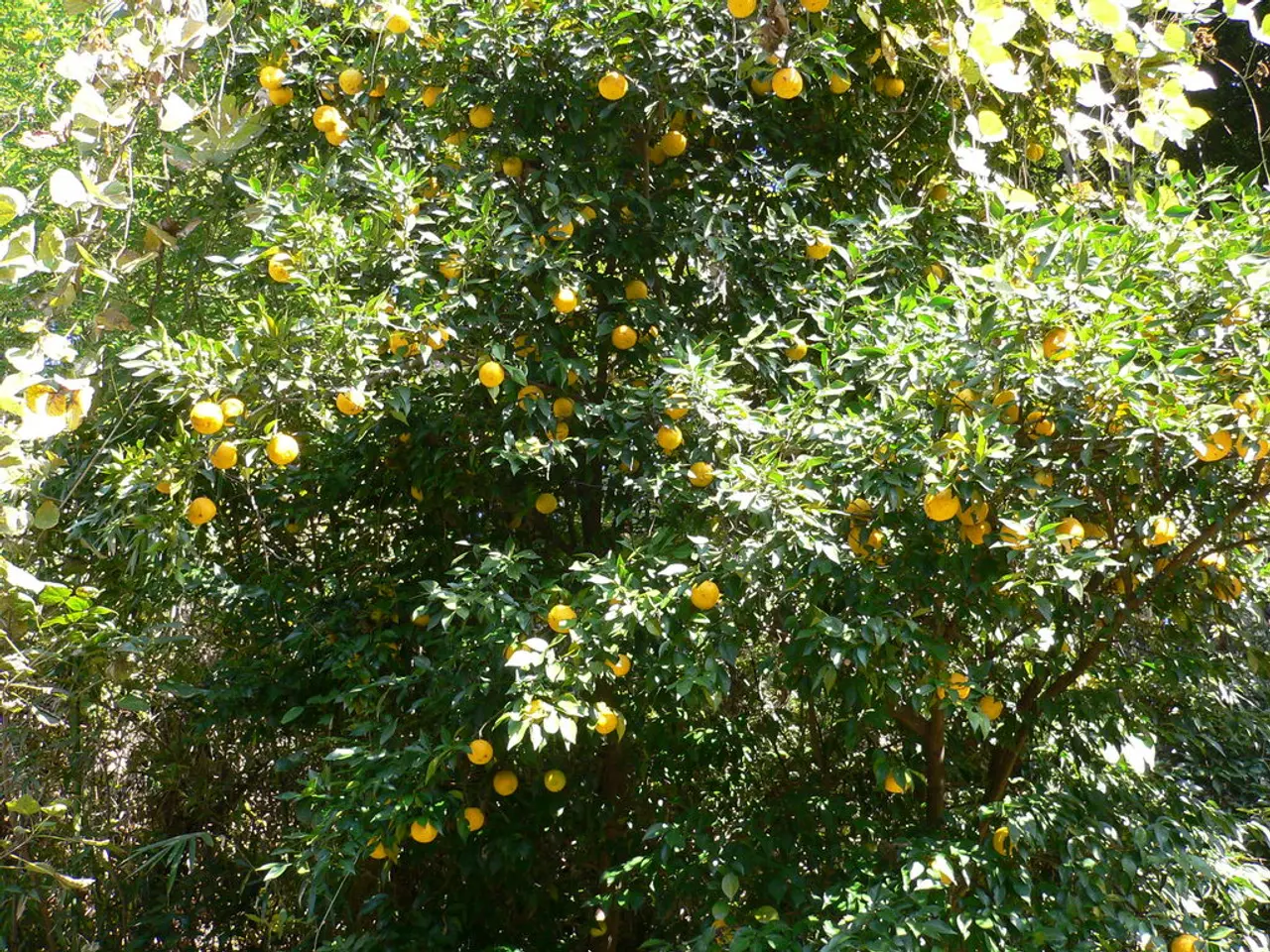
Tips for Successfully Cultivating Citrus Plants Inside Your Home (Avoiding Frequent Errors)
Indoor citrus trees, such as lemons, limes, and oranges, require specific conditions to thrive. Here's a guide to help you care for these subtropical plants and avoid common mistakes.
Lighting
Provide 8–12 hours of bright, direct sunlight daily, ideally near a south-facing window. If natural light is insufficient, use supplemental grow lights to ensure even and adequate light exposure. Rotate the tree every 2 weeks to prevent uneven growth from leaning toward light.
Watering
Water when the top 2-3 cm of soil is dry. Usually, this means about once a week in spring and summer, and less frequently (every 2-3 weeks) in winter during dormancy. Avoid overwatering to prevent root rot; ensure water drains well and never let the plant sit in soggy soil.
Soil and Pot
Use a well-draining, slightly acidic potting mix specifically formulated for citrus or a blend of peat moss, perlite, and pine bark. Choose containers with adequate drainage holes to prevent waterlogging, which leads to root rot.
Fertilizing
Feed regularly, especially during the growing season (spring and summer), with a fertilizer designed for citrus trees to promote healthy foliage and fruit production. Monthly feeding is typical.
Temperature and Humidity
Keep indoor temperatures ideally around 70–75°F (21–24°C). Avoid placing trees near cold drafts or heating vents. Citrus trees appreciate humidity; if air is dry, mist the leaves or use a humidity tray.
Common mistakes to avoid:
- Using pots that are too large or too small, which can stress the tree or cause water retention problems.
- Overwatering or poor drainage leading to root rot.
- Insufficient lighting resulting in leggy growth or failure to fruit.
- Not rotating the plant, causing uneven growth toward the light source.
- Neglecting seasonal watering adjustments during winter dormancy.
Following these practices will help maintain healthy indoor citrus trees with vibrant foliage and fruit production.
Supplementing with grow lights can help if direct sunlight is insufficient. Water thoroughly and let excess drain out. Check the top 2-3 inches of soil before watering, only water when it's dry. Avoid sudden drops below 50°F (10°C). Maintain humidity above 50% with a humidifier, pebble tray, or group plants together. Citrus trees are heavy feeders and need regular nutrition to flower and fruit.
Stick your finger into the soil to check if it's dry several inches down before watering. Placing a citrus tree near a south-facing window is ideal. Ensure pots have drainage holes and never let the plant sit in standing water. Neglecting fertilization can lead to problems for indoor citrus trees.
Ensuring your citrus tree thrives within a home-and-garden setup, place it near a south-facing window for optimal sunlight, and consider using supplemental grow lights if insufficient light is available. To avoid water retention issues and root rot, use a well-draining potting mix and select a pot with drainage holes. Maintaining a lifestyle that includes regular fertilizing during the growing season promotes healthy foliage and fruit production.




)